 Live
LiveCosmic Tea
Astrology that talks back.
Relationship astrology with twelve AI guides who know your real birth chart, remember the people in your life and text you first.
Category
AI companion
Timeline
3.5 months · 7 sprints · 780+ commits
Focus
Consumer AI
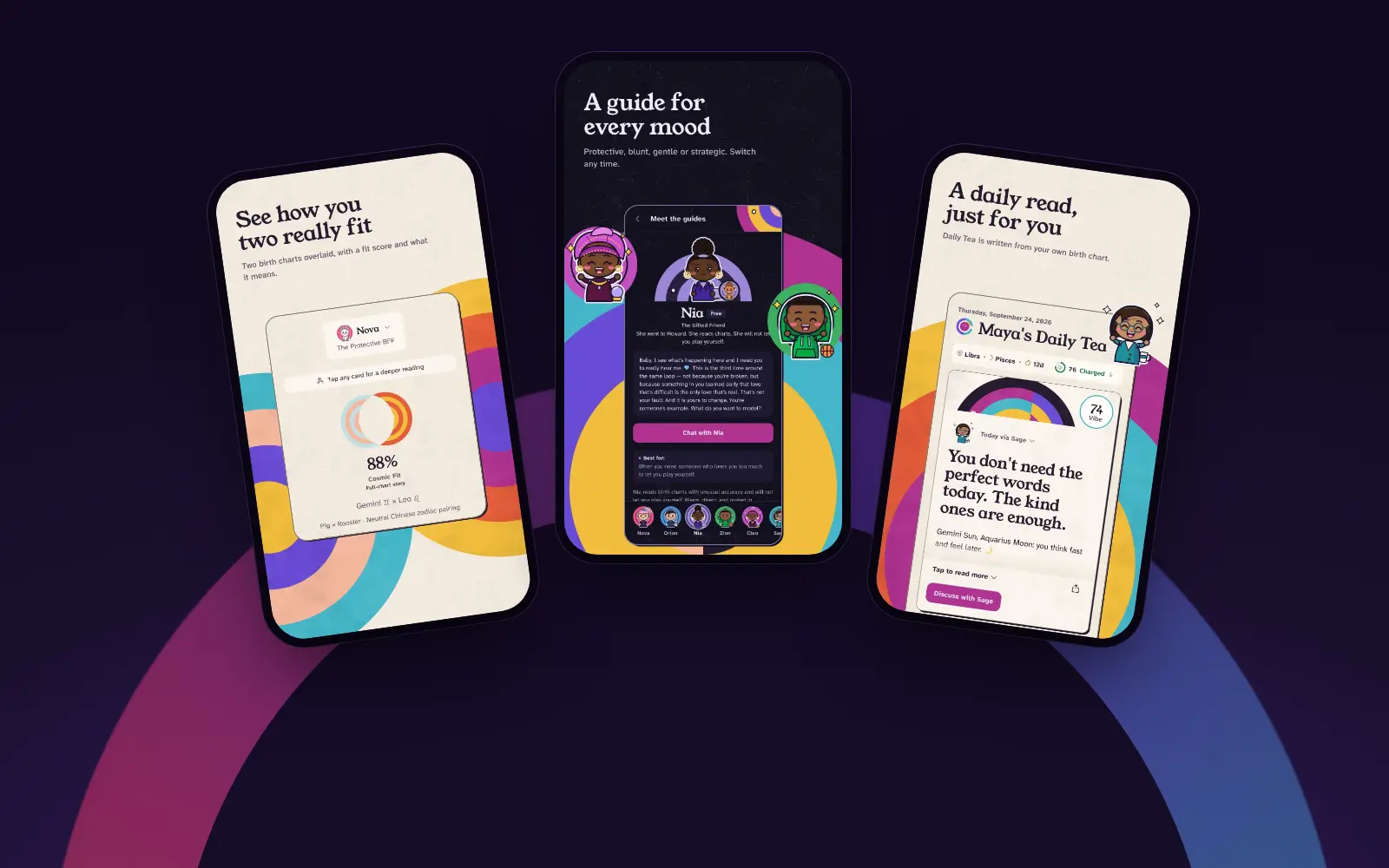
From the live app
Why I built it
I wanted astrology that actually knows you, not the vague horoscope-app fluff. AI guides that read your real birth chart and give you honest relationship advice. It is aimed at the crowd who screenshot their texts and ask what does this mean, so I gave them a cast of guides to talk it out with, twelve of them now, each with their own voice. The whole thing runs as a real freemium business across web, iOS and Android.
What it does for people
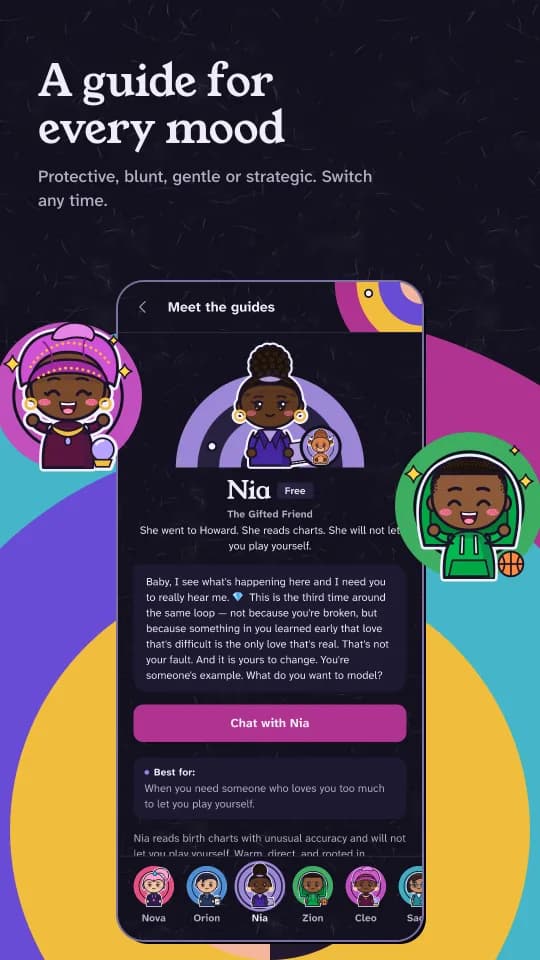
- Twelve AI guides, each with their own voice and a familiar who keeps them company, who actually know your real birth chart
- Guides that text first. Your first reading arrives before you've typed a word, and they check in when the sky or your people have something going on
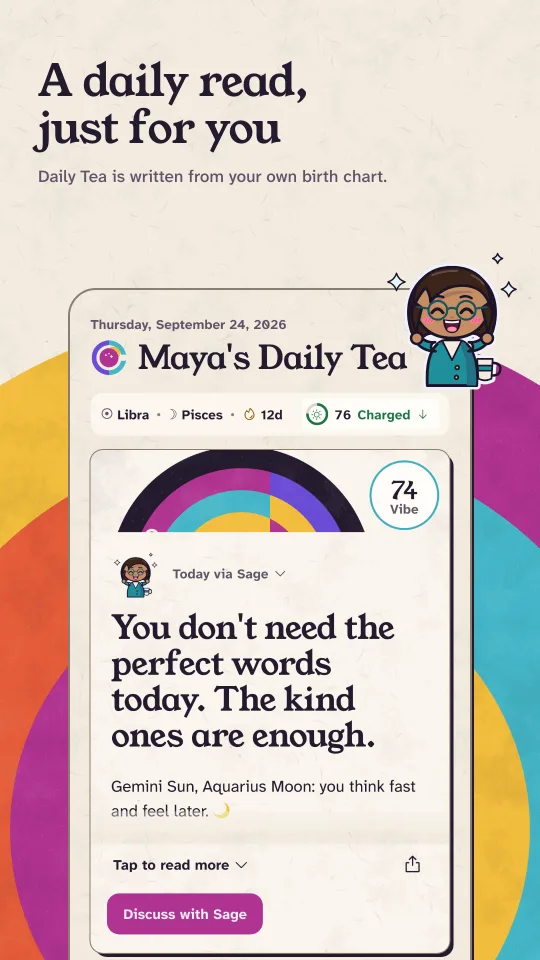
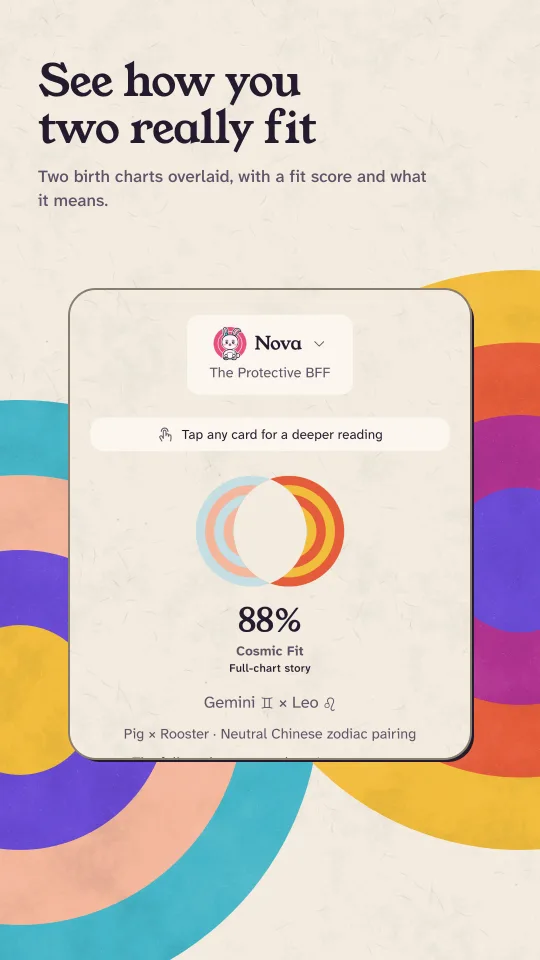
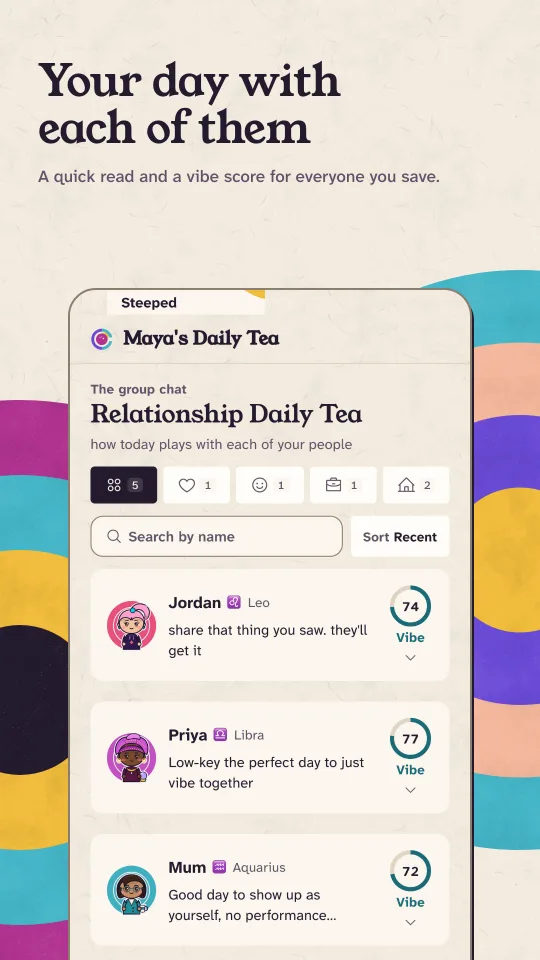
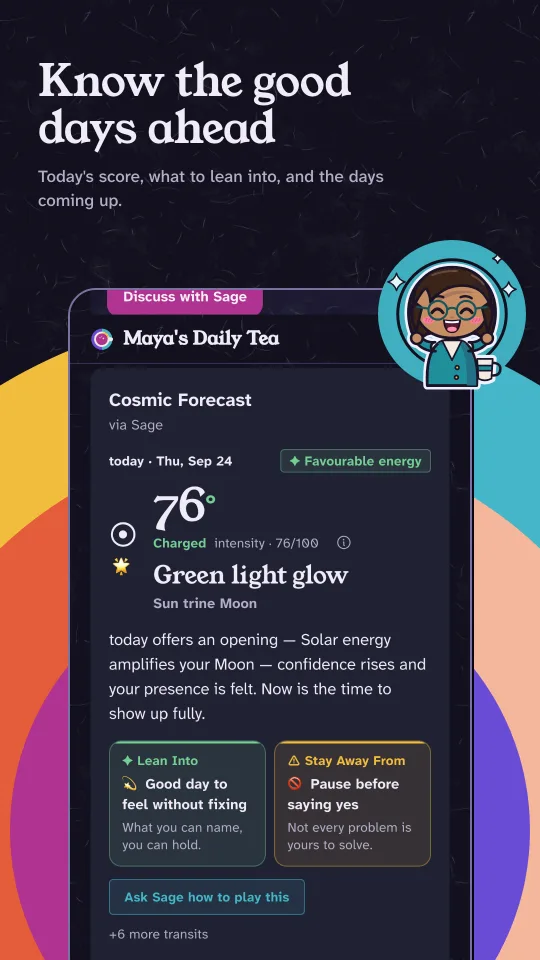
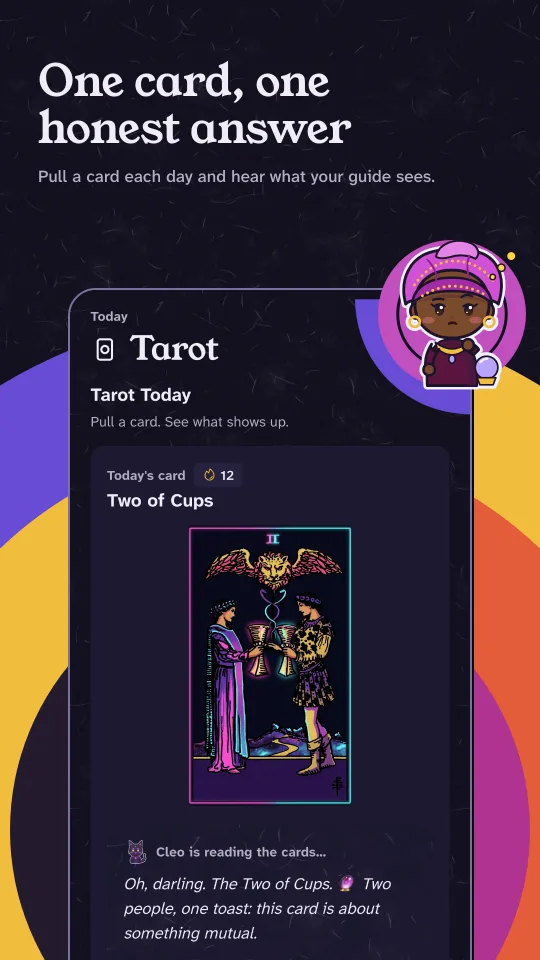
- Honest compatibility with a fit score from two charts overlaid, plus a Daily Tea, a card a day and a forecast of the good days ahead
- Drop in screenshots of a conversation and your guide works out who said what, then reads it against both charts
- On the Galaxy plan the guides compare notes, so what you told Nova, Sage already knows
- Free to start with four guides, then Cosmic at $9.99 or Galaxy at $12.99 a month. No ads, ever
Under the hood
- Claude Haiku 4.5 with a shared core of about 10,000 tokens held above Haiku's 4,096-token cache floor, locked by a test so it can't quietly drift below it. A daily cost check holds a margin floor on paid plans
- A four-block system prompt: shared core and per-guide voice are both cached, while the per-relationship dossier and cross-chat memory stay uncached, so I never burn cache-write dollars on content that changes every message
- Embedding-based cross-chat memory. Each relationship builds up remembered facts via vector retrieval, so a guide can call back to something you told it weeks ago
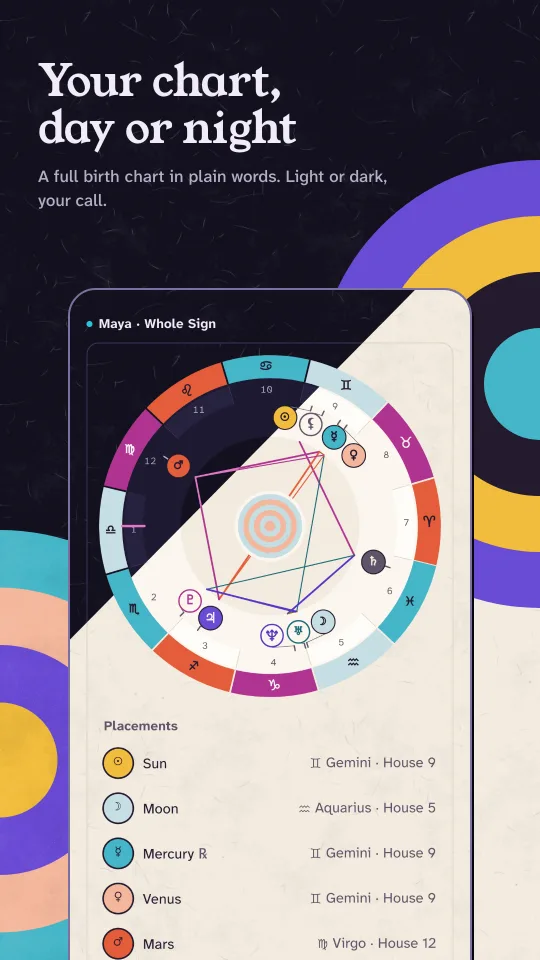
- Real ephemeris astrology from astronomy-engine: actual planetary longitudes, Ascendant and MC, whole-sign houses and aspect orbs, not canned horoscope text
- Server-side tier enforcement that the client can never spoof. Every request re-derives your tier, with monthly counters guarded by SECURITY DEFINER Postgres functions
The cool bits
- One Next.js codebase ships to web, iOS and Android via Capacitor, with native push, haptics, and Apple and Google sign-in bridges
- Shipped in eight languages (English, Korean, Japanese, Spanish, Brazilian Portuguese, French, German and Italian) with per-guide localized intros
- A founder dashboard running PostHog funnels, D1/D7/D30 retention, per-model cost attribution, and a daily Claude Sonnet business brief
How long it took
About 3.5 months of focused build.
3.5 months · 7 sprints · 780+ commits
What I worked through
The hardest part was making the unit economics work before launch. I reverse-engineered Haiku's 4,096-token cache floor and restructured the entire prompt so caching actually kicked in, then built server-side rate limiting and tier verification. Getting real astrology right was the other big one: locking down the ephemeris math with tests so the signs never drift, and computing genuine synastry instead of faking it. On top of that, shipping one codebase to web and both app stores with Capacitor, RevenueCat, push, and eight languages meant a lot of moving parts had to line up.
The full stack
- Next.js 16 (App Router)
- React 19
- TypeScript
- Tailwind CSS v4
- Claude Haiku 4.5 (prompt caching)
- Claude Sonnet (founder briefs)
- Supabase (Postgres, Auth, RLS)
- RevenueCat (mobile IAP)
- Capacitor (iOS + Android)
- next-intl (8 locales)
- astronomy-engine (ephemeris)
- PostHog (HogQL funnels)
- Sentry
- Firebase Admin + APNs + web-push
- Zod
- Vitest
- Playwright
- Vercel